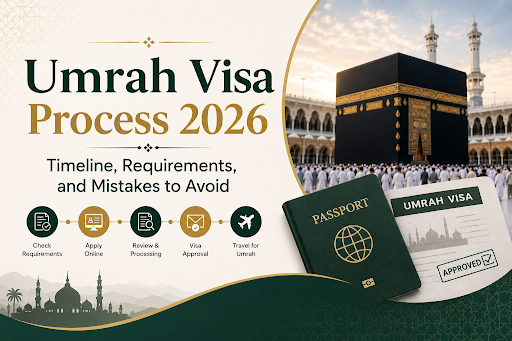
It’s important to know the purpose of the hajj in Islam. The significance of Hajj in Islam goes beyond the physical hindrance. It is a very personal journey with great spiritual significance for Muslims worldwide.
The Hajj pilgrimage is not just a physical journey; it has a profound spiritual impact. It is a wish of every Muslim to perform Hajj once in their lifetime.
On the 9th of Dhul Hijjah, this divine journey takes place. All Muslims gather in Mecca for this religious pilgrimage. Many Canadian, UK, US, and worldwide pilgrims travel to Saudi Arabia for the Hajj.
Hajj Package Prices from USA & UK
The conquest of Mecca
In 8 AH (630 CE), Prophet Muhammad had amassed sufficient religious and political authority to secure victory in Makkah, the city where he was born and where he had suffered much persecution at the hands of its inhabitants. He destroyed the idols in and around the Kaaba and rededicated it to the worship of one God, as was its intended purpose.
The Treaty of Hudaibiyah
Prophet Muhammad had a dream in which he saw himself performing `umrah (lesser pilgrimage) in Makkah along with his companions. Then decided to perform the Hajj with HIS companions. They started their journey towards Mecca with the intention of umrah without weapons despite the ongoing war between them and the Quraysh of Mecca.
When the Quraysh heard of the approaching Muslim congregation, a flurry ensued. Investigations revealed to them the Muslims’ true, non-violent intent of just performing `Umrah in and around the precincts of Al-Masjid Al-Haram, a pilgrimage that was considered a sacred ritual even in the pagan Arab religion.
After this information became the source of peace and negotiations between both parties.
Many Islamic travel agencies are providing Hajj packages from Canada that include accommodation, a tour guide, meals, and transportation.
Hajj before Islam
The Kaaba was originally built by Prophet Ibrahim (AS) and Prophet Ismail (AS) as a house of monotheism (Qur’an 2:127). The Kaaba was filled with idols from both inside and outside in the 6th century. Pilgrims came for tawaf without clothes. But Arab people still performed the Hajj pilgrimage with idols. There was no divine meaning to the Hajj.
During the same year, the Prophet P.B.U.H received a new revelation that ordained pilgrimage to Makkah for all Muslims:
“In it are clear signs [such as] the standing place of Abraham. And whoever enters it shall be safe. And [due] to Allah from the people is a pilgrimage to the House for whoever can find a way there. But whoever disbelieves, then indeed, Allah is free from the need of the worlds.”
Since the Prophet was preoccupied with receiving the delegations, he could not undertake the pilgrimage himself and remained in Madinah. He appointed his close companion, Abu Bakr al-Siddiq, as leader of the pilgrimage and commissioned his cousin Ali ibn Abi Talib to proclaim the following injunction among the pilgrims, as stated at the beginning of the ninth Surah.
This is a declaration of disassociation from Allah and His Messenger to those with whom you had made a treaty among the polytheists. It was also announced that idolaters weren’t allowed to offer the pilgrimage, nor would they be permitted to perform Tawaf nakedly.
The First Official Islamic Hajj
The first Hajj under Islam took place in the 9th year of the Hijrah. The Prophet did not lead it but sent Abu Bakr in his place. The 9th year of Hijrah witnessed a rapid spread of Islam. Representatives of tribes inhabiting far-off parts of Arabia poured into Madinah.
They had a two-fold purpose: to convert to Islam and to establish relations with the newly formed Islamic state. These delegations came in such large numbers that the year became known as the year of delegations. In this way, one after another, all the tribes of Arabia entered the fold of Islam.
The Farewell Pilgrimage
The only Hajj performed by the Prophet Muhammad was this year in 10 Hijrah. After Islam, the first proper Hajj was. More than 100,000 Muslims attended this hajj. In this Hajj, the Prophet PBUH taught every step of Hajj.
On the mount of Arafat, he delivered his last sermon. In which HE PBUH said all humans are equal in front of the Almighty. He taught about the rights of women. He demolished the ritual of interest and said blood and property are sacred.
During this Hajj, the verse was revealed:
“Today I have perfected your religion for you…” (Qur’an 5:3)
This marked the completion of Islam.
Standardisation of Hajj Rituals
During the Farewell Pilgrimage, the Prophet performed Hajj and explained all the Hajj steps: first wear ihram, perform tawaf round the Kaaba, stand on the Mount of Arafat, spend a night in Muzdalifah, collect pebbles from Mina, and stone them to sahitans. In the end, on 10 of dhul hijjah, he sacrificed the animal.
He instructed:
“Take your rituals from me.” (Sahih Muslim 1297)
This statement made his practice the permanent model for all future generations.
Final Words
The history of Hajj during the lifetime of the Prophet Muhammad is a story of purification and completion. Within just 10 years (622–632 CE), Hajj transformed from an idol-centred ritual into a global symbol of pure monotheism.
The pilgrimage of Hajj was not just a journey: it gave the lesson of patience and faith. Today we perform Hajj according to the Sunnah of Prophet Muhammad PBUH by fulfilling his command.